Vehicle pulls or drifts
The car consistently wants to move left or right instead of tracking naturally down a level road.
Wheel alignment · Mesa, Arizona
Pulling, uneven tire wear or an off-center steering wheel may point to alignment—but worn steering or suspension parts can create similar symptoms. Start by finding the cause.
Alignment is geometry—but the vehicle comes first
Proper wheel alignment helps the tires roll in the intended direction and meet the road at the correct angles. When those angles are out of specification, a vehicle can pull, wear tires unevenly or leave the steering wheel off-center.
But alignment isn't always the whole story. Loose or worn steering and suspension components, damaged parts, tire conditions and ride-height changes can affect how the vehicle tracks. A.J. McKay's looks for those problems before treating alignment as the automatic answer.
When alignment deserves a look
The car consistently wants to move left or right instead of tracking naturally down a level road.
Inside-edge, outside-edge or feathered tread wear can be a clue that alignment or worn components need attention.
The vehicle travels straight but the steering wheel no longer sits level in your hands.
Wandering, looseness or a vehicle that needs constant correction can involve more than alignment alone.
Replacing steering or suspension parts—or hitting a hard pothole or curb—can change alignment angles.
If the old tires wore abnormally, checking the cause can help keep a new set from developing the same pattern.
Camber · caster · toe
Camber describes the inward or outward tilt of the wheel when viewed from the front. Too much positive or negative camber can contribute to edge wear.
Caster describes the steering-axis angle when viewed from the side. It influences straight-line stability, steering return and feel.
Toe describes whether the fronts of paired wheels point slightly toward or away from one another. Incorrect toe can scrub tires quickly and create feathered tread wear.
Before and during alignment
Worn tie rods, ball joints, bushings or other components can affect alignment and vehicle control. Those conditions need to be identified rather than hidden by adjustment.
On vehicles that provide rear adjustment, all four wheels can be evaluated relative to the vehicle's centerline and manufacturer specifications.
Tire pressure, rotation history, worn components and alignment can produce different wear patterns. The tread often provides useful clues.
Alignment is ultimately about how the vehicle behaves on the road—not just the numbers displayed by the equipment.
Diagnosis before adjustment
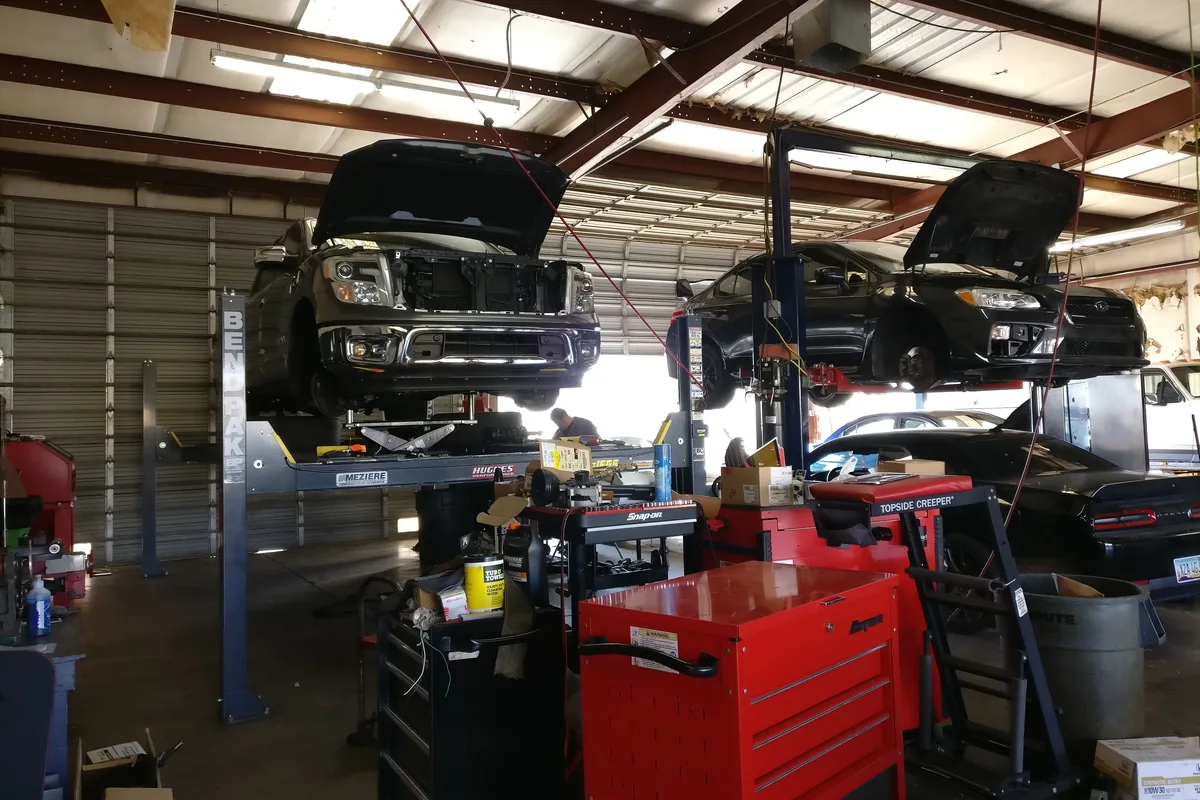
An alignment rack can measure wheel angles precisely, but it can't tighten a worn joint or repair a damaged suspension component. If the underlying hardware allows the wheel to move where it shouldn't, simply adjusting alignment may not solve the complaint for long.
That's why the same diagnosis-first approach used throughout McKay's repair work applies here too: understand the symptom, inspect what affects it, then make the appropriate correction.
Tell us what the car is doing →Wheel alignment FAQ
Common clues include pulling or drifting, an off-center steering wheel and unusual tire wear. Because tires and worn steering or suspension parts can create similar symptoms, an inspection can help identify the actual cause.
Wheel alignment checks and adjusts wheel angles relative to the vehicle and road. Tire balancing corrects uneven weight distribution in a tire-and-wheel assembly. Alignment problems often show up as pulling or uneven wear; imbalance often causes vibration at certain speeds. Inspection helps distinguish them because damaged tires and worn components can cause similar symptoms. Ask the shop which service your vehicle needs.
They are key alignment angles. Camber describes wheel tilt, caster relates to the steering-axis angle and straight-line stability, and toe describes whether paired wheels point slightly inward or outward relative to each other.
It evaluates wheel angles at both axles. Which angles can be adjusted depends on the vehicle. Rear-wheel alignment affects how the vehicle tracks, so checking only the front can miss part of the problem.
Yes. Incorrect alignment—especially toe or excessive camber—can contribute to rapid or uneven tire wear. Other mechanical and tire conditions can also cause abnormal wear, so the pattern should be evaluated rather than assumed.
Many steering and suspension repairs can change wheel geometry or require alignment afterward. The appropriate procedure depends on which components were replaced and the vehicle design.
Sometimes alignment contributes, but looseness or wandering can also come from worn steering or suspension parts or tire problems. Those should be checked before assuming an adjustment will solve it.
Pulling? Uneven tire wear? Crooked steering wheel?
Call A.J. McKay's Auto Repairs in Mesa and tell us what you're noticing.
Call (480) 985-2435 3130 E Main St #1 · Mesa, AZ 85213