Squealing or squeaking
Brake noise can be an early sign of wear or another condition that deserves inspection before it progresses.
Brake repair · Mesa, Arizona
Squealing, grinding, vibration, pulling or a pedal that suddenly feels different? Get the braking system inspected before a smaller problem becomes a bigger repair.
Stopping starts with diagnosis
Brake problems don't always announce themselves the same way. One vehicle may squeal, another may shake through the steering wheel, and another may develop a soft pedal or pull when stopping.
A.J. McKay's looks at the braking system as a whole before recommending repairs. Pads and rotors matter, but so do calipers, hydraulics and the condition of the components working together.
When to call the shop
Brake noise can be an early sign of wear or another condition that deserves inspection before it progresses.
Grinding during braking can indicate significant wear or metal-to-metal contact. Have it checked promptly to limit additional damage.
A shake in the pedal or steering wheel while braking can point to rotor or other braking-system concerns that should be inspected.
A pedal that feels unusually soft, spongy or travels farther than normal can indicate a hydraulic or other brake-system problem.
If the vehicle consistently pulls to one side during braking, uneven braking force or another mechanical issue may be involved.
A brake or ABS warning light deserves attention. The light identifies a condition to investigate—not automatically the part to replace.
Inspect the system
Replacing pads because they're worn is straightforward. Selling pads, rotors, calipers and everything around them without first checking their condition isn't.
McKay's inspects the components involved, looks for the cause of the symptom and explains what needs attention so the repair recommendation fits the vehicle.
Brake service in Mesa
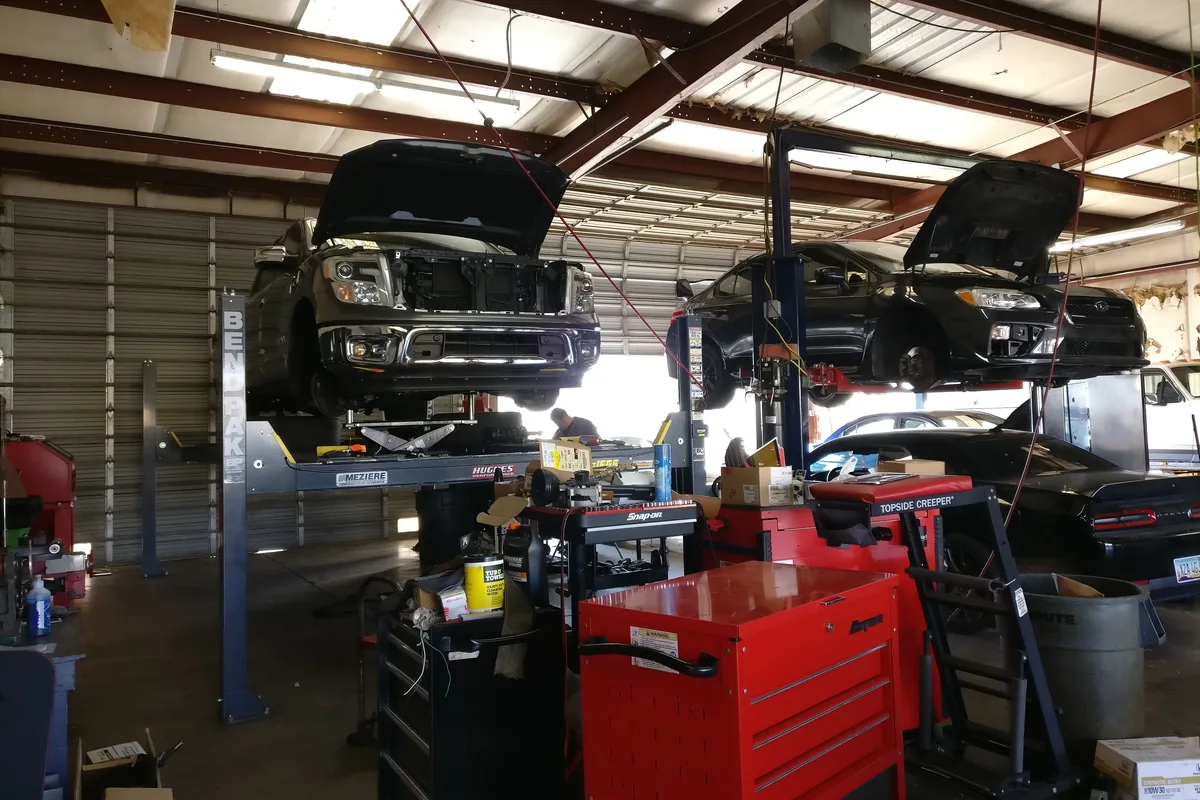
Inspection and service for worn friction material, rotor concerns and the noises or vibration that can accompany them.
Checking caliper operation and related hardware when braking is uneven, dragging or not behaving normally.
Diagnosis when pedal feel changes or there are signs of fluid loss or another issue affecting hydraulic braking force.
Starting with the warning and diagnostic information, then testing the system before deciding what actually needs repair.

No guesswork with stopping
Brakes are too important for shortcuts, and they're also too important for unnecessary parts. The right repair starts with understanding what is worn, what has failed and what is still serviceable.
McKay's has served Mesa drivers since 1996, with an emphasis on diagnosing the problem and giving customers a straightforward path to getting it fixed.
Talk to A.J. McKay's →Brake repair FAQ
Not always. Worn pads are a common cause, but brake noise can have several sources. Inspection determines the condition of the pads and the rest of the braking system.
Brake-related vibration can be associated with rotor or other component conditions. The vehicle should be inspected to determine where the vibration originates.
A sudden or significant change in brake-pedal feel should be treated seriously. If braking ability is reduced or you are unsure the vehicle can stop safely, don't continue driving it; arrange for professional inspection.
Tell us the year, make and model, what you hear or feel, whether the symptom happens every time you brake, and whether any brake or ABS warning lights are on.
Something changed when you hit the brakes?
Call A.J. McKay's Auto Repairs and tell us what you're hearing or feeling.
Call (480) 985-2435 3130 E Main St #1 · Mesa, AZ 85213